
Last updated November 15, 2026
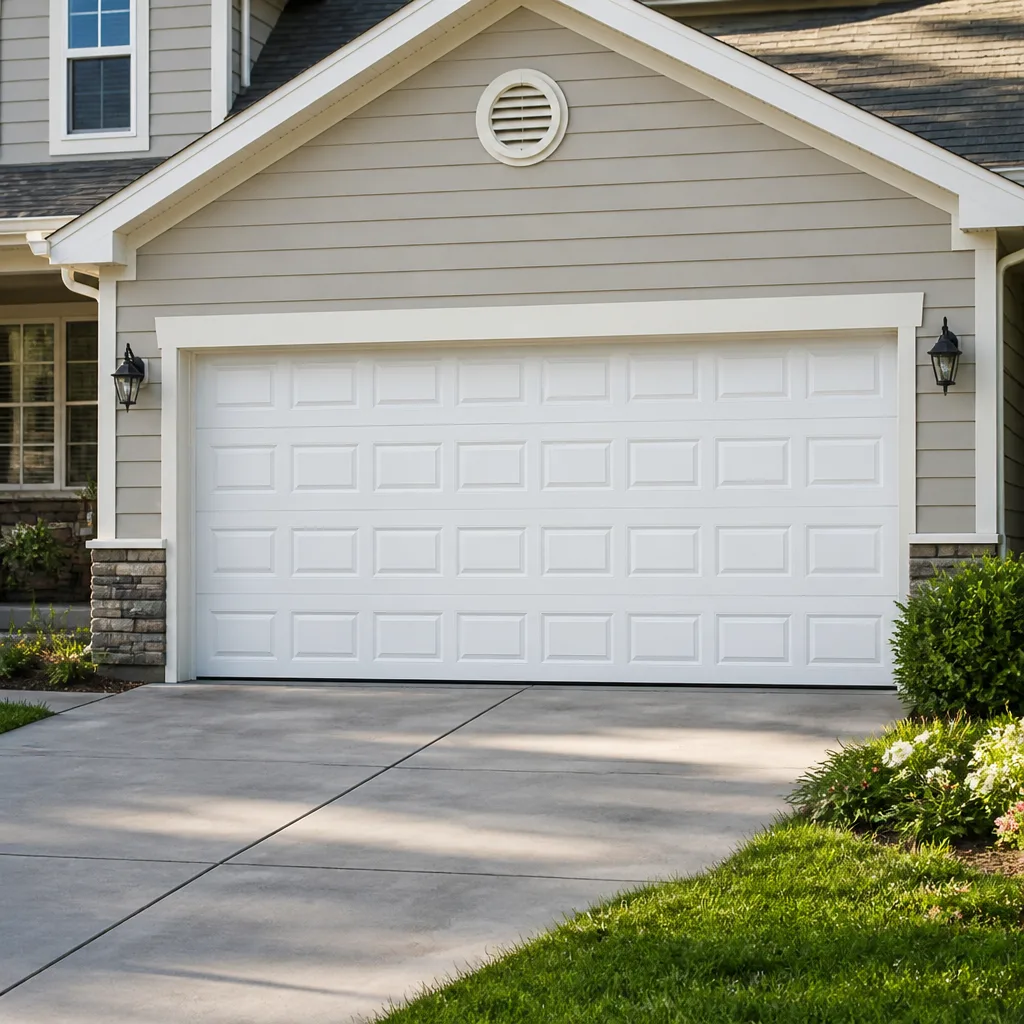 Raised-panel steel
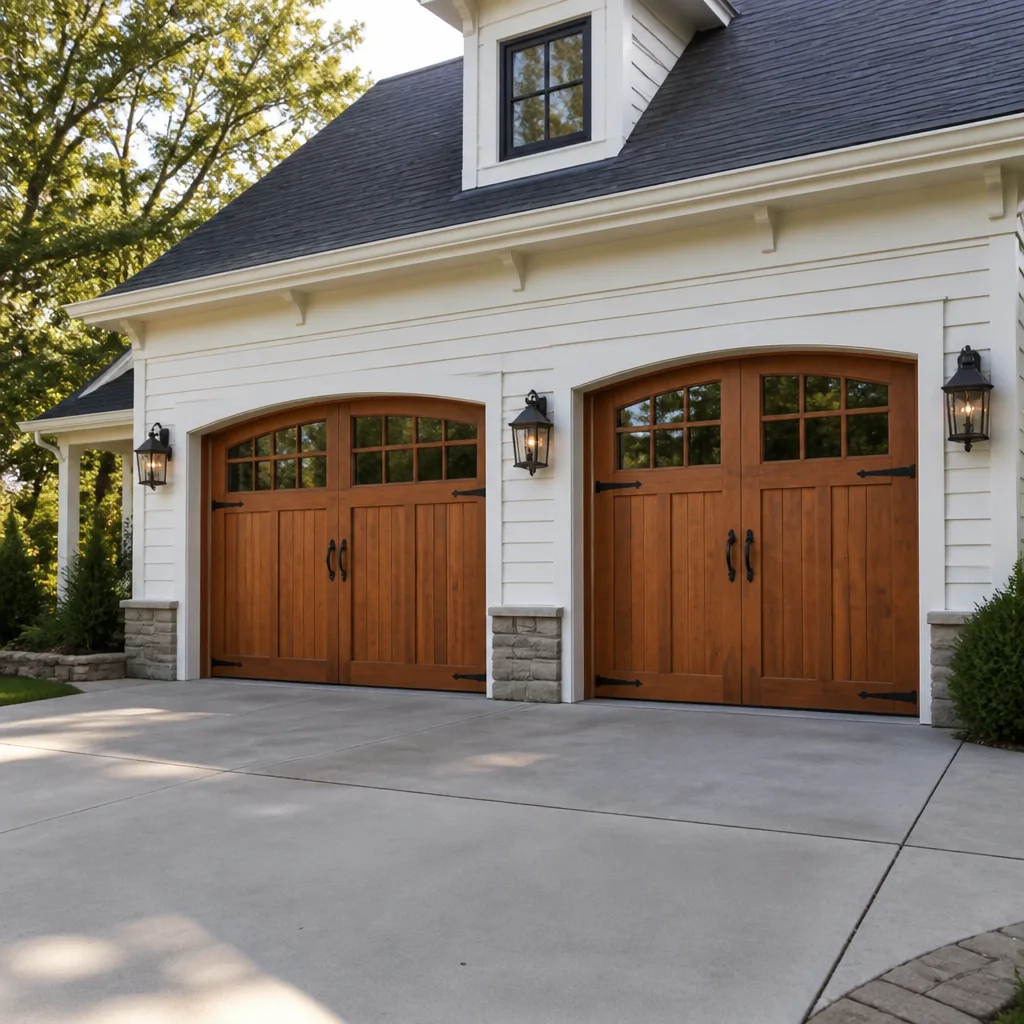 Carriage house
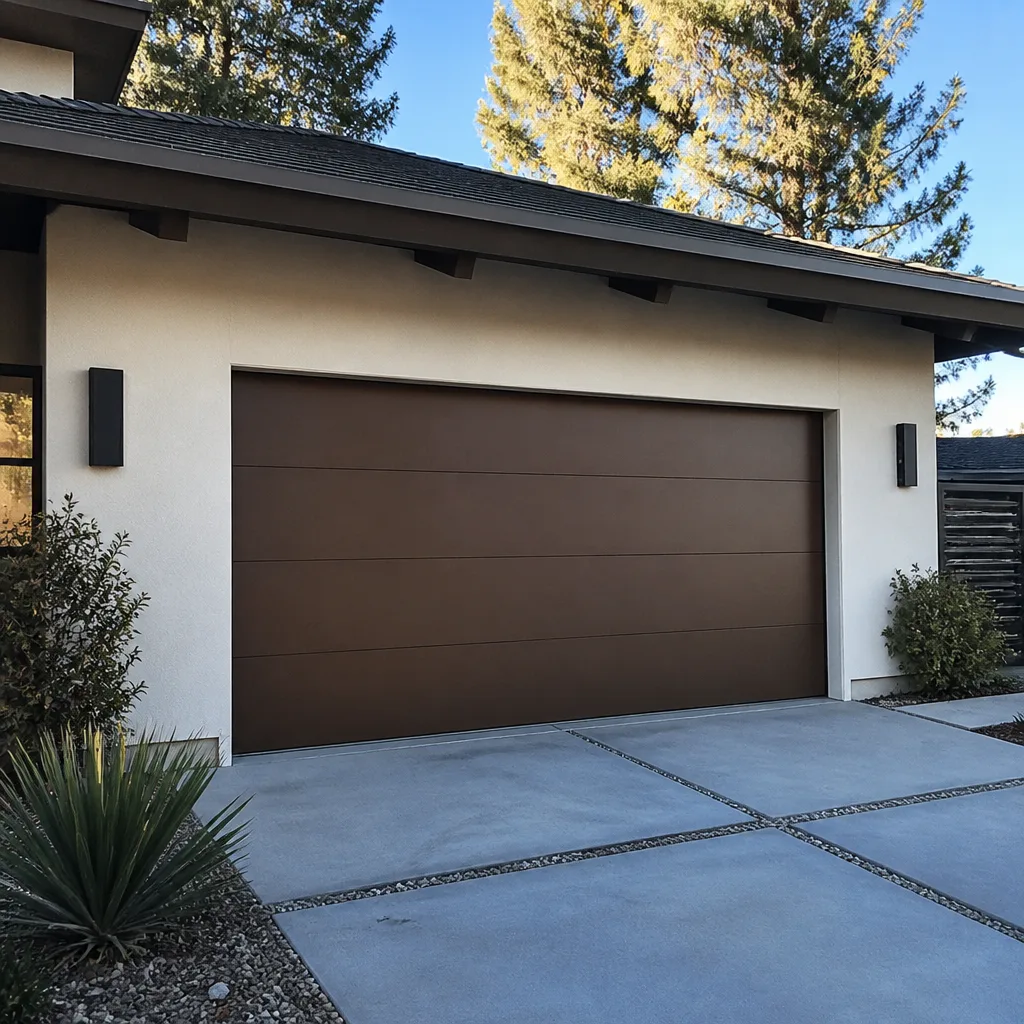 Modern flush
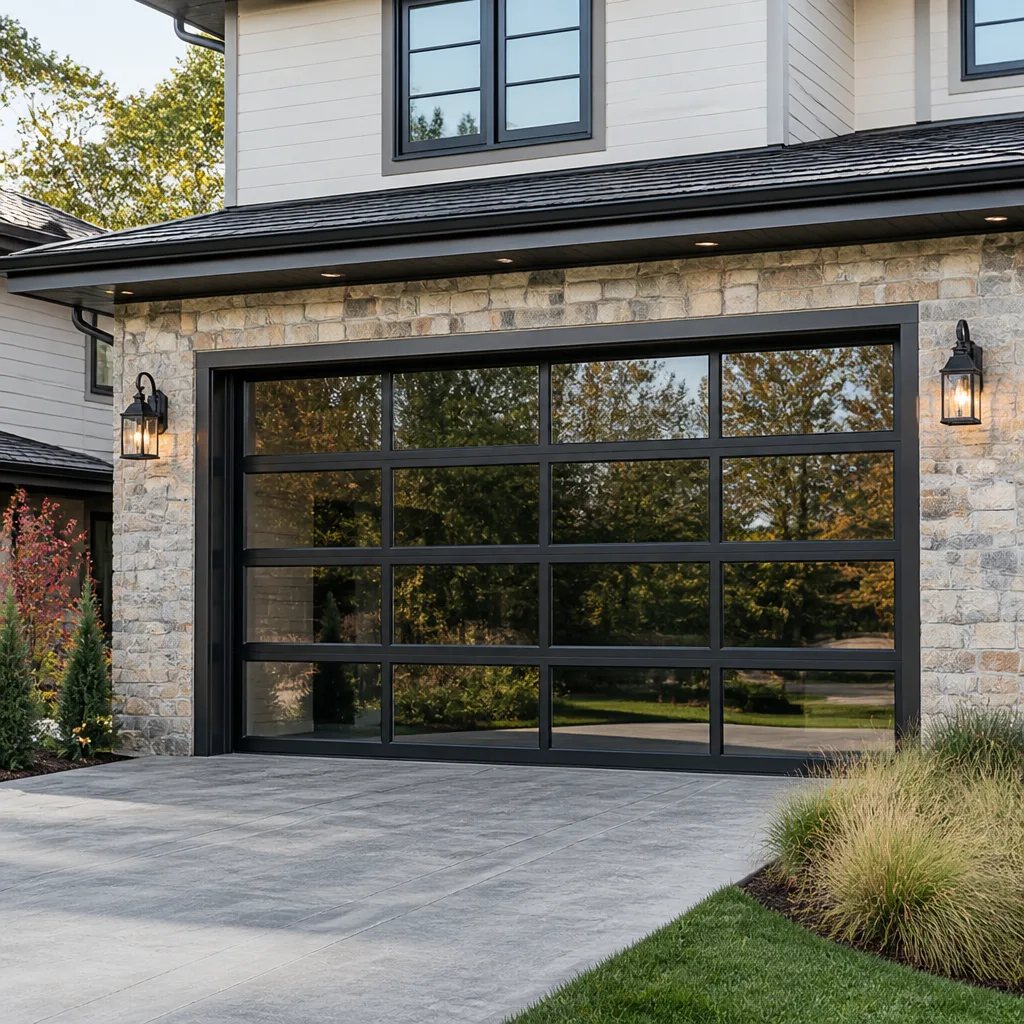 Full-view glass
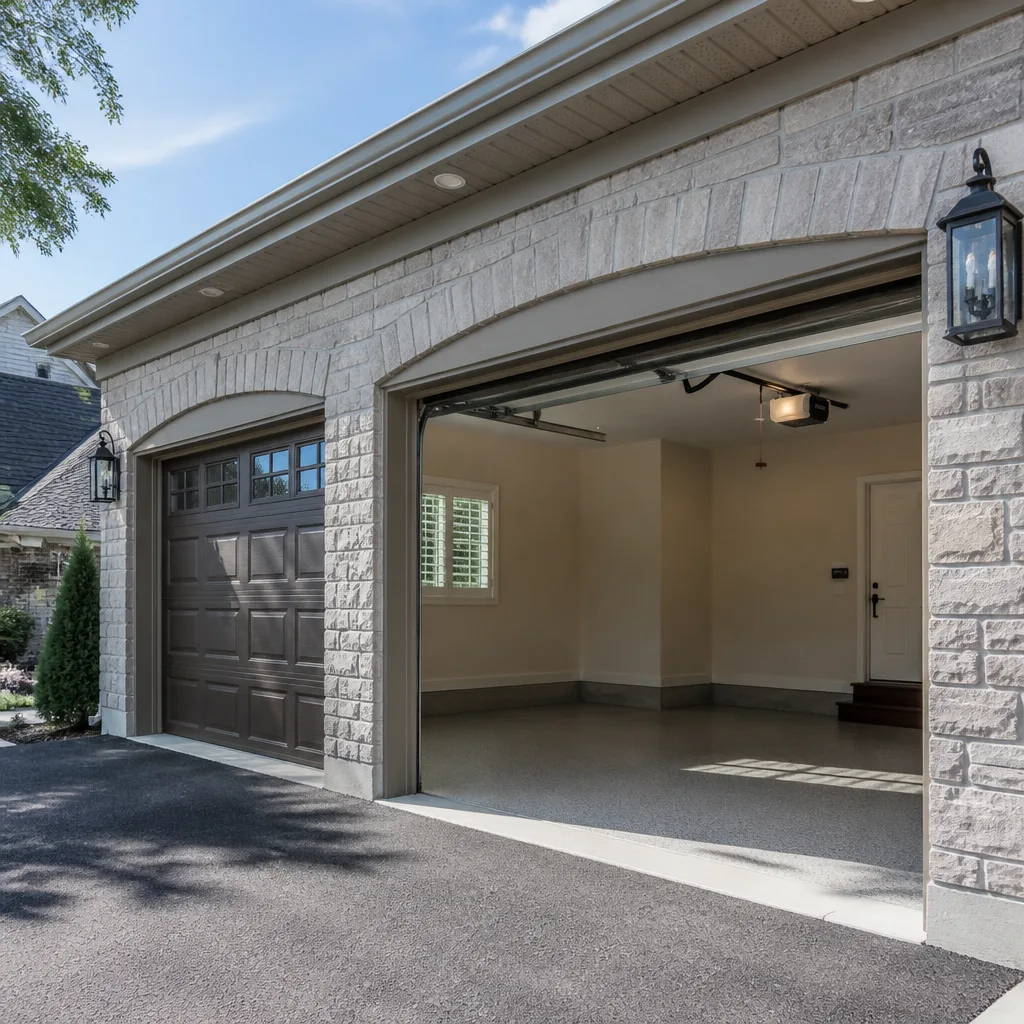 LiftMaster openers
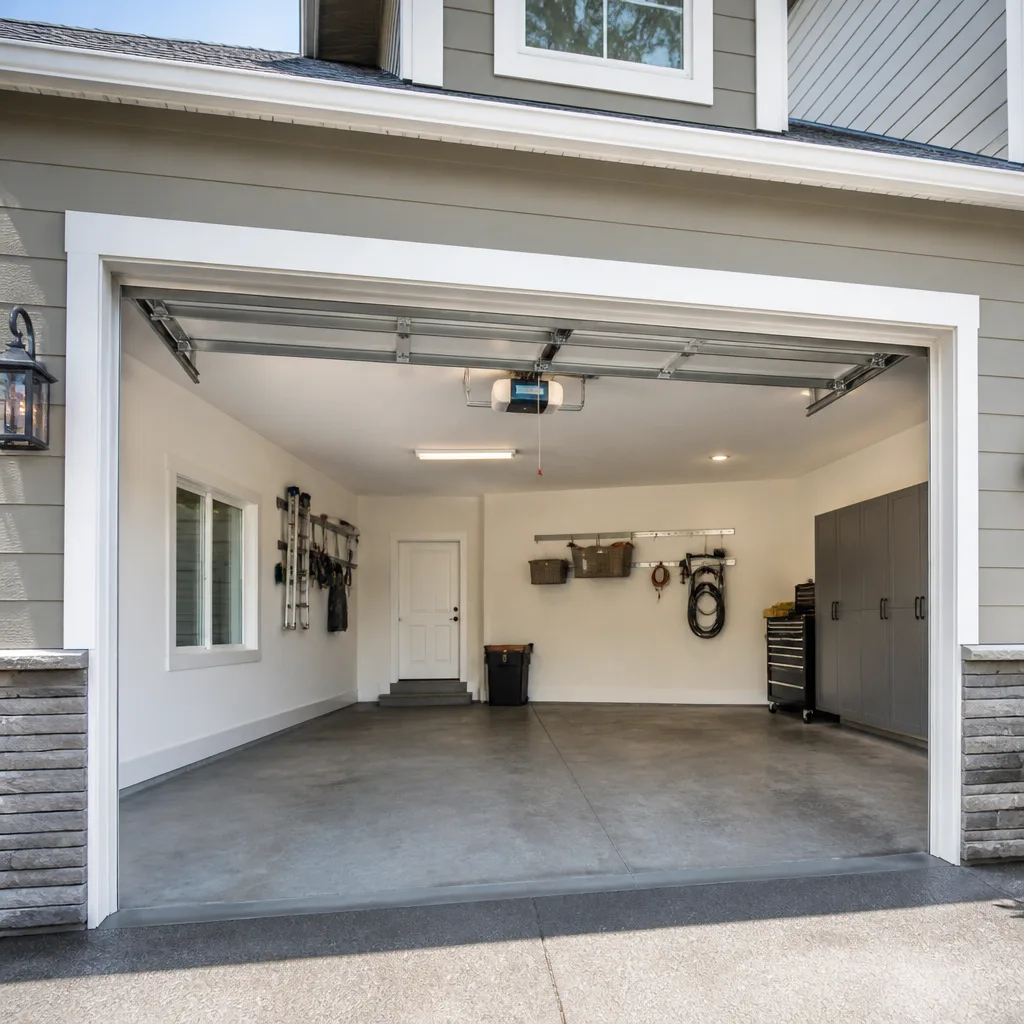 Chamberlain openers
Full 25-point door and opener safety check with every visit - springs, cables, rollers, tracks, and your LiftMaster or Chamberlain opener included
You get a price before we start. It does not change when the pro arrives.
Get your free estimateGarage Door Repair Maintenance Schedule: What to Do and When
If the maintenance schedule you’re following came from a video filmed somewhere dry and hot, it was written for a different door, a different climate, and probably a different opener than the one hanging in your garage. A wood door set back under a hillside tree canopy in Ventura ages nothing like a new steel door in an inland neighborhood. A daily-cycle opener on a busy household wears nothing like one that runs twice a week. And moisture is the quiet variable that most checklists leave out entirely.
What follows is a schedule built around your actual door system: its material, its age, how often it cycles, and what the local climate does to it. You’ll learn what to check at each interval, what to leave alone, what a technician measures that you can’t, and how to document it all so your warranty holds up. We work on garage doors only, and this is how we think about maintenance in Ventura.
Quick Answer
Most garage doors need a light owner inspection once a month, a lubrication and balance check every four to six months, and a professional tune-up every one to two years. Doors over ten years old, wood and composite doors, and doors that cycle more than six times a day should be inspected and serviced more often, and doors near the coast need their cables, hinges, and bottom seal looked at on a shorter interval because moisture degrades them faster.
Styles & brands we work with
- Raised-panel steel
- Carriage house
- Modern flush
- Full-view glass
- LiftMaster openers
- Chamberlain openers
Table of Contents
- Why a Generic Maintenance Schedule Falls Short in Ventura
- How to Build a Schedule That Fits Your Door
- What to Check Every Month (Owner-Level)
- The Four-to-Six-Month Service: Lubrication and Balance
- The Annual Professional Tune-Up: What a Technician Measures
- Part-by-Part Lifespan: Springs, Cables, Rollers, and Seals
- Documenting Maintenance to Protect Your Warranty
- The Three Skips That Cause Most Emergency Calls
Why a Generic Maintenance Schedule Falls Short in Ventura
A flat “lubricate every spring and fall” template treats every door the same, and garage doors are not the same. The material of the panels, the weight of the door, the type of opener, the age of the hardware, and how often the door cycles all change what actually needs attention and when. Two doors on the same block in Ventura can need very different schedules.
Moisture is the biggest reason. In a marine-influenced climate, the air carries more humidity than a dry inland climate, and hardware that sits in it degrades on a shorter clock. Springs, cables, hinges, and the bottom seal all react to moisture over time. That doesn’t mean your door is failing – it means the inspection intervals that work in a dry climate will catch problems later than the intervals that work here.
The door material matters just as much. A wood door absorbs and releases moisture and its panels can swell, warp, and crack over years. A steel or composite door doesn’t absorb moisture the same way but its finish and hardware still wear. And a door on an older Ventura home with original hardware has different lifespans than a door installed recently.
Usage frequency is the last big variable. A door that opens twice a day and one that opens ten times a day put very different wear on springs, rollers, and the opener’s motor. The two-cycle door might coast on the same hardware for years longer than the ten-cycle door before the same part wears out.
So before you follow any checklist, ask what your door is made of, how old it is, and how often it moves. That’s the foundation the rest of this guide builds on.
How to Build a Schedule That Fits Your Door
The right maintenance interval comes from three inputs: material, age, and usage. Get those right and the schedule mostly writes itself.
Step 1: Identify your door material
- Look at the inside of the door panel. Wood grain and knots mean wood. A smooth skin over a rigid core means steel or composite. Foam-filled panels with a structural skin are composite.
- Check the bottom seal and weatherstripping. Worn, cracked, or moisture-stiff seals are common in a humid climate.
- Note any panel swelling, surface cracking, or finish failure. Wood and composite show moisture damage first.
Step 2: Note the age of the door and hardware
- Older hardware uses thinner springs, cables, and hinges that have already seen years of cycles.
- Doors over ten years old benefit from a professional inspection every year instead of every two.
- If a part has been replaced before, its clock restarts from the replacement date, not from the door’s age.
Step 3: Count your daily cycles
- A household that leaves once and comes home once averages two cycles a day.
- A busy household with several drivers, deliveries, and comings and goings can easily hit eight or ten.
- Doors over six cycles a day should be lubricated and inspected more often, and their springs and cables checked sooner.
A wood door in a humid Ventura neighborhood with ten cycles a day should be serviced every year, checked quarterly, and inspected monthly by the owner. A newer steel door with two cycles a day can go every two years professionally and still be fine. When you call us, we ask these questions before we ever arrive, so we diagnose your actual system rather than a generic one. If you’d rather have us look at it, start with garage door repair and we’ll get you on a realistic schedule.
What to Check Every Month (Owner-Level)
A five-minute monthly visual and hearing check catches most problems before they become repair calls. None of it requires tools, and none of it requires getting near the springs or cables.
- Watch and listen. Open and close the door and listen for grinding, squealing, popping, or uneven movement. A door that hesitates or jerks at one point usually has a balance or roller issue.
- Check the balance test. Disconnect the opener with the manual release and lift the door halfway by hand. It should hold roughly in place. If it slams down or rises on its own, the springs are out of balance and a technician needs to look. Do not try to adjust the springs yourself.
- Look at the bottom seal. In a humid climate, the seal under the door degrades faster than in a dry one. Look for stiffening, cracks, gaps, or daylight underneath. A worn seal lets weather in and the door may not sit level.
- Inspect hinges and rollers. Watch the hinges and rollers as the door moves. A hinge should move freely. A roller should turn smoothly in its track, not wobble or grind. If a hinge or roller looks dry or catches, note it for the next lubrication visit.
- Check the tracks. Look for debris, dents, or tracks that have been bumped out of alignment. Don’t force a bent track back into shape.
- Check the opener’s safety reverse. Test that the door reverses when it meets an obstruction on the way down. This is a safety function, and if it fails, stop using the door.
That’s it. No adjustments. If anything looks or sounds wrong, that’s the signal to call. Cables and springs are under heavy tension and can cause serious injury if handled wrong. Leave them to a trained technician.
The Four-to-Six-Month Service: Lubrication and Balance
Every four to six months, do a slightly deeper check that includes lubrication, a full balance test, and an inspection of the parts that wear between tune-ups. This is still owner-level for most of it, but a couple of items belong on a technician’s list.
What you can do yourself
- Lubricate hinges, rollers, and tracks. Use a garage door lubricant (not WD-40, not grease). Apply a thin coat to hinge pivots, roller bearings, and the inside of the tracks. Wipe off the excess so it doesn’t collect dust.
- Clean and inspect the bottom seal. Wipe the seal with a damp cloth and look for cracks or stiffness. A stiff seal in a humid climate won’t seal as well and may need replacement.
- Check the door’s balance again. Release the opener and lift the door halfway. If it doesn’t hold, the springs need attention.
- Look at the cables. Run your eyes along the cables on both sides of the door. Look for fraying, rust, or slack. Don’t touch them. If a cable is frayed or slack, call a technician.
- Test the safety reverse. Place a small object under the door’s path and close it. The door should reverse immediately. If it doesn’t, the opener’s safety adjustment needs attention.
What needs a technician
- Spring tension and torque. Adjusting a spring’s tension requires specific tools and knowledge. This is the single most dangerous part on a garage door. Never attempt it yourself.
- Cable replacement. Cables are under heavy tension and can snap. A technician replaces them with the proper safe procedures.
- Track alignment. A slightly bent track can be realigned by a technician with the right tools. Don’t try to force it.
If your door uses a LiftMaster, Chamberlain, or Genie opener, also note whether the safety sensors and reverse function are working every time you do a lubrication. Most of these systems have a force adjustment that can drift after years of use, and a technician can confirm it’s set correctly. If the opener itself is acting up, that’s garage door opener repair territory, and it’s worth having it checked rather than living with it.
The Annual Professional Tune-Up: What a Technician Measures
Even if you do everything right on the owner side, an annual professional tune-up is worth having – especially for doors over ten years old or with heavy use. Here’s what a technician actually does that you can’t.
- Measured spring tension and proper torque. A technician uses the right tools to confirm the springs carry the door’s weight correctly. Out-of-balance springs wear faster and stress the opener.
- Cable inspection with proper gloved handling. Cables can snap unexpectedly. A trained technician checks them safely and replaces any that show fraying or rust.
- Balance test with weight measurement. The technician tests the door’s balance and confirms the springs are matched to the door’s weight.
- Hinge and roller inspection and replacement. A trained eye catches worn parts that aren’t yet failing but will within months.
- Opener force and safety sensor calibration. Many openers, including LiftMaster and Chamberlain, have adjustable force settings and safety sensors that need periodic recalibration.
- Bottom seal and weatherstripping assessment. A technician can tell you whether the seal is still doing its job or needs replacement.
- Track alignment and hardware torque check. Loose bolts, drift, and misalignment are caught before they cause real problems.
The annual tune-up costs less than the emergency repair it often prevents. It’s also the point where we can tell you whether your system is still worth repairing or whether replacement makes more sense. We repair what you have first – that’s our approach – but we’ll be honest when replacement is the better call. For homes in Ventura, we schedule these visits around your door’s actual wear pattern, not a calendar.
Part-by-Part Lifespan: Springs, Cables, Rollers, and Seals
Different parts on a garage door wear on very different clocks. Knowing the rough lifespan of each helps you plan ahead instead of being surprised. Actual lifespan varies with usage, material, and climate, but here’s how we think about it.
- Springs: The most-used wear part. They cycle with every open and close. A high-cycle spring lasts longer than a standard one. Springs in a humid climate can also corrode, which shortens their life. A door over six cycles a day may need springs replaced more often than a low-use door.
- Cables: Cables corrode in humid air. A frayed or rusted cable is a safety issue and should be replaced. Coastal moisture accelerates cable wear, and this is exactly why we inspect cables on a shorter interval in Ventura. Crane style.
- Rollers: Rollers wear in the tracks. Steel rollers can develop flat spots. Nylon rollers wear differently. A technician checks rollers at every service visit.
- Bottom seal: A flexible seal under the door. In a humid climate, the seal can stiffen and crack, letting in moisture and pests. Replacing it is small work compared to the moisture damage it prevents.
- Hinges: Hinges wear where the panels pivot. Lubrication prolongs them; worn hinges should be replaced when they don’t move freely.
- Opener: The motor and gears in an opener wear over time. LiftMaster, Chamberlain, and Genie openers are common in this area; when the motor starts to fail, repair or replacement is a real decision.
When a part’s lifespan is up, the honest answer is usually to replace it before it fails. Springs and cables especially – a failed spring can leave a car trapped or a door stuck. We work with all the major brands, and we diagnose the actual equipment rather than assuming it’s a generic problem.
Documenting Maintenance to Protect Your Warranty
If you have a newer Clopay, Wayne Dalton, Amarr, or Raynor door – or a recently installed opener – a written record of maintenance can matter if you ever need warranty service. Many warranties on these brands require proof that the door was maintained as recommended. A few minutes of record-keeping each year protects that.
Here’s how to keep good records:
- Keep a simple maintenance log. Note the date of each owner check and each professional visit.
- Record what was done and what was found. What was lubricated, what was tested, what part was replaced, and any issues flagged.
- Save receipts and invoices. Keep the written estimate and the invoice from each service visit in the same place – a folder, a notes app, or a shared document.
- Note the model and install date of your door and opener. Brand names like Clopay, Amarr, and Wayne Dalton matter if a warranty issue comes up.
- Note any DIY work. Owner-level lubrication and inspection are fine. Major adjustments by a hobbyist can jeopardize warranty coverage, so be honest about what was done.
If you’ve had a technician out, ask for a written report or invoice that lists the work. That’s the record your warranty will care about. When we’re out at a home in Ventura, we’re happy to write down what we found and what we did so the homeowner has a record. For someone with a brand-name door still under warranty, this step is easy to skip and worth doing. Our technicians have up to 15 years of experience recognizing the signs and documenting the work accurately.
The Three Skips That Cause Most Emergency Calls
In our experience, most emergency garage door calls trace back to three maintenance skips that could have been caught at specific points in the schedule. Knowing where they show up on the schedule is the best defense.
Skip 1: Skipping the balance test
The monthly balance test is the easiest skip because the door seems to work fine. A door that’s out of balance stresses the springs, the opener, and the hardware every time it moves. It shows up in the monthly balance test. If the door doesn’t hold halfway up, the springs need attention before they fail. Caught at the monthly test, it’s a simple adjustment. Skipped, it becomes a broken spring and a trapped car.
Skip 2: Ignoring frayed or rusted cables
Cables are easy to forget because they’re not something you think to look at. In a humid climate, they corrode and fray. The four-to-six-month check is where you look, and the annual professional tune-up is where a technician confirms it’s safe. A frayed cable left alone can snap, which is dangerous and leaves the door unusable. This is the skip most likely to produce an emergency call in Ventura. Cable inspection at the seasonal check is where it’s caught.
Skip 3: Leaving a worn bottom seal
The bottom seal is the quiet skip. A worn seal lets moisture and pests into the garage and stresses the door’s balance. It shows up at the seasonal check and the annual tune-up. Left, it causes humidity damage around the garage and sometimes door-closing problems. It’s small work that heads off bigger moisture-driven issues.
If you catch these three at their intervals, most emergency calls don’t happen. That’s the practical value of following the schedule. If you’ve skipped a while and want a professional eye on it, our team works on the system you have.
Common Mistakes to Avoid
- Following a rigid spring-and-fall schedule. A generic twice-a-year template ignores material, age, and usage. Tailor it to your door, or the schedule catches problems after they start.
- Using WD-40 or grease instead of garage door lubricant. WD-40 is a solvent, not a lubricant, and grease collects dust. Use the right product, and wipe off the excess.
- Forcing a bent track back into shape. A track out of alignment can buckle when forced. Have a technician realign it with the right tools.
- Attempting spring or cable work. These parts are under heavy tension and can cause serious injury. This is a professional’s job. This is the single biggest safety mistake we see.
- Skipping the monthly balance test because the door “seems fine.” A door can be out of balance and still open. The balance test is the only reliable way to catch it.
- Not documenting maintenance on a warranty door. For Clopay, Amarr, or Wayne Dalton doors still under warranty, a missing maintenance record can complicate a claim.
- Ignoring the bottom seal in a humid climate. A worn seal lets moisture and pests in and stresses the door. Replacing it is small work compared to the damage it prevents.
- Living with a failing opener rather than having it checked. A motor or gear that’s slipping and grinding is on its way out. An early diagnosis saves a surprise failure.
See the difference
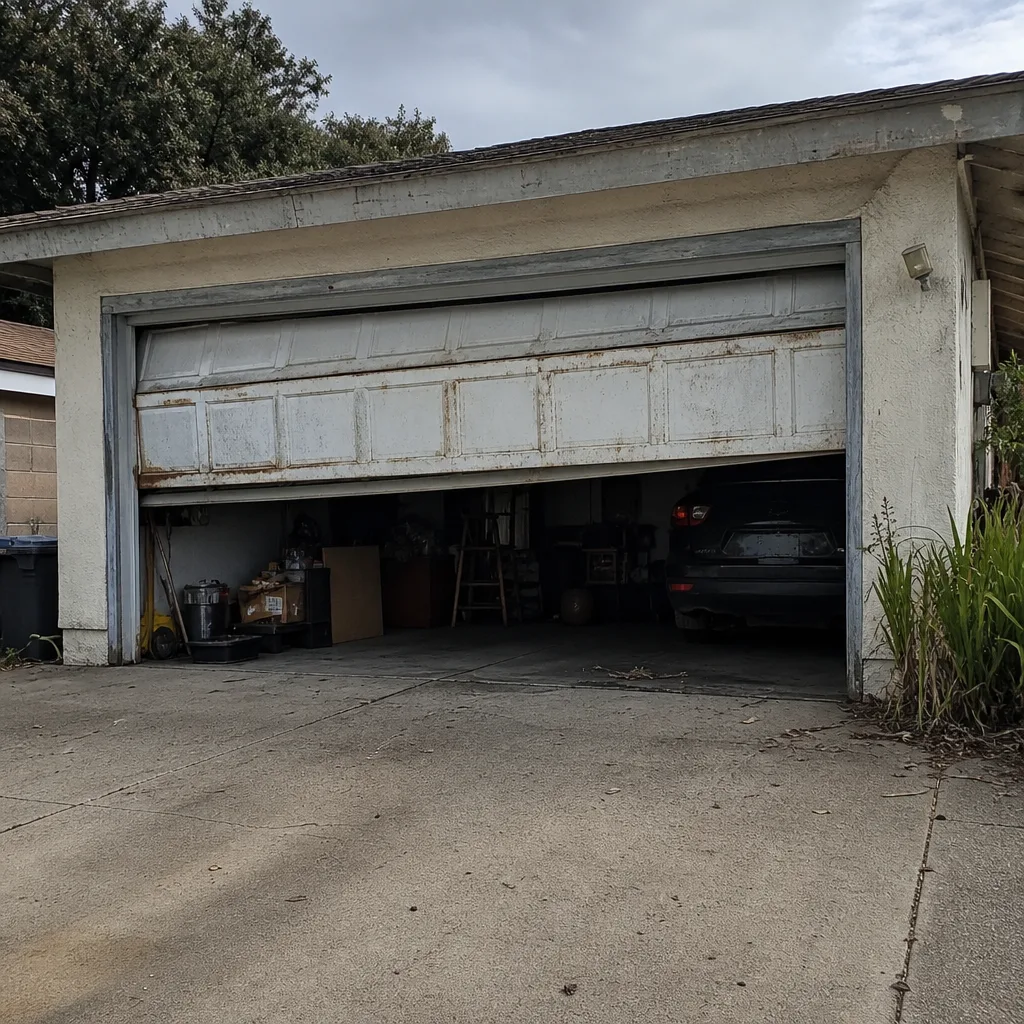 Before
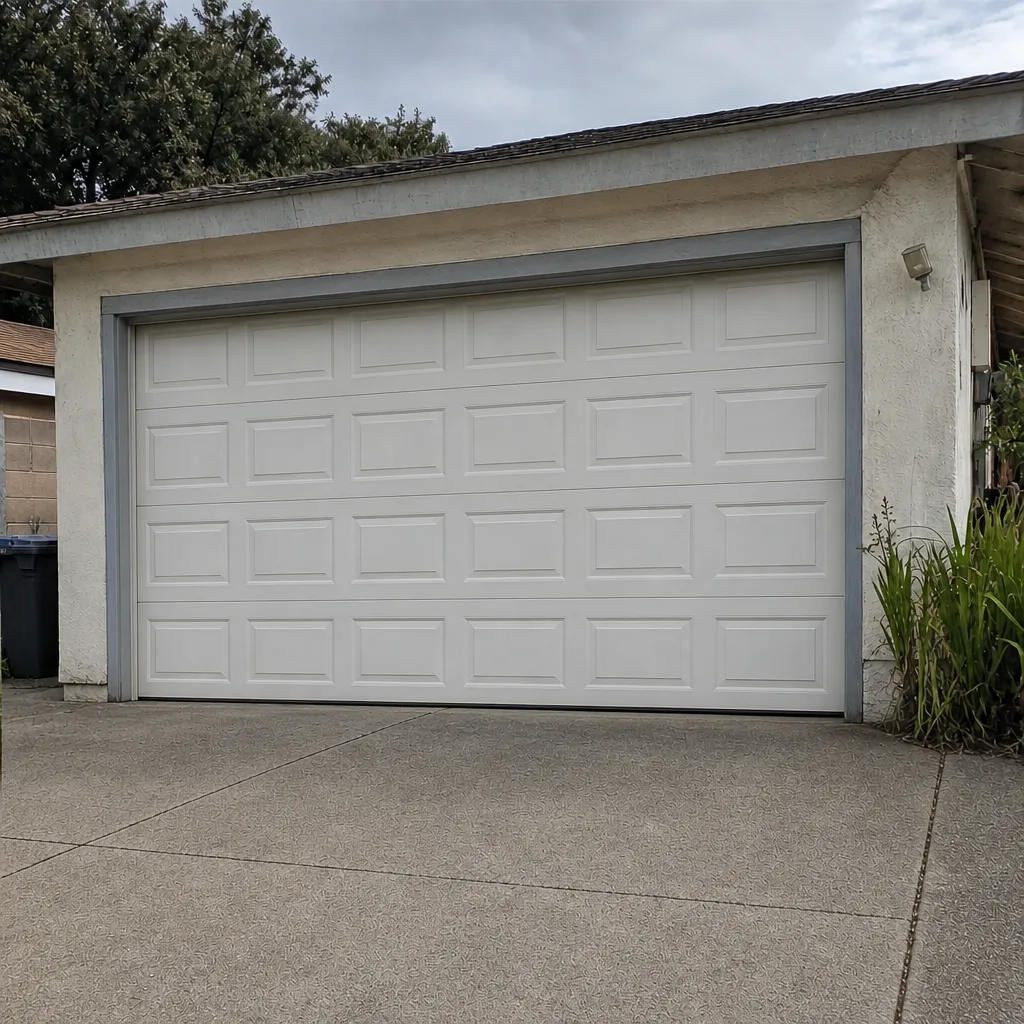 After
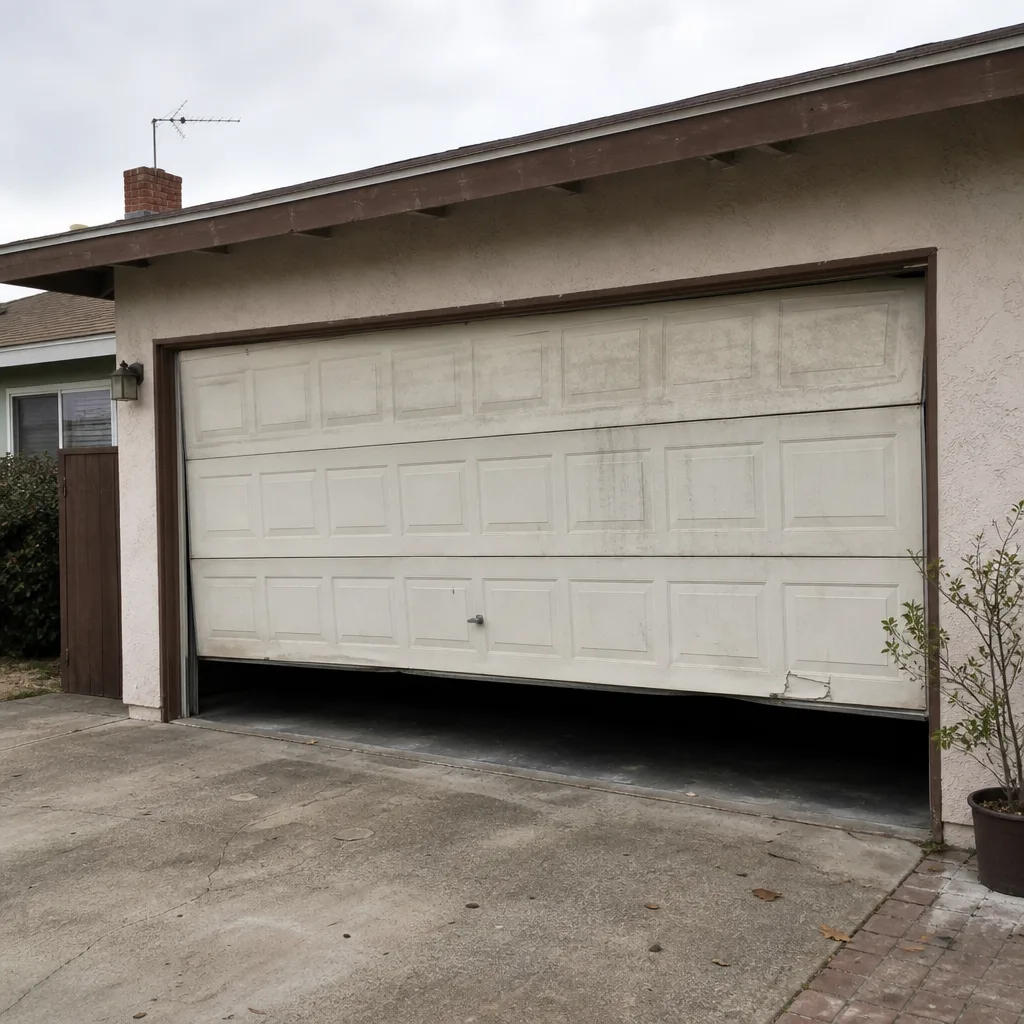 Before
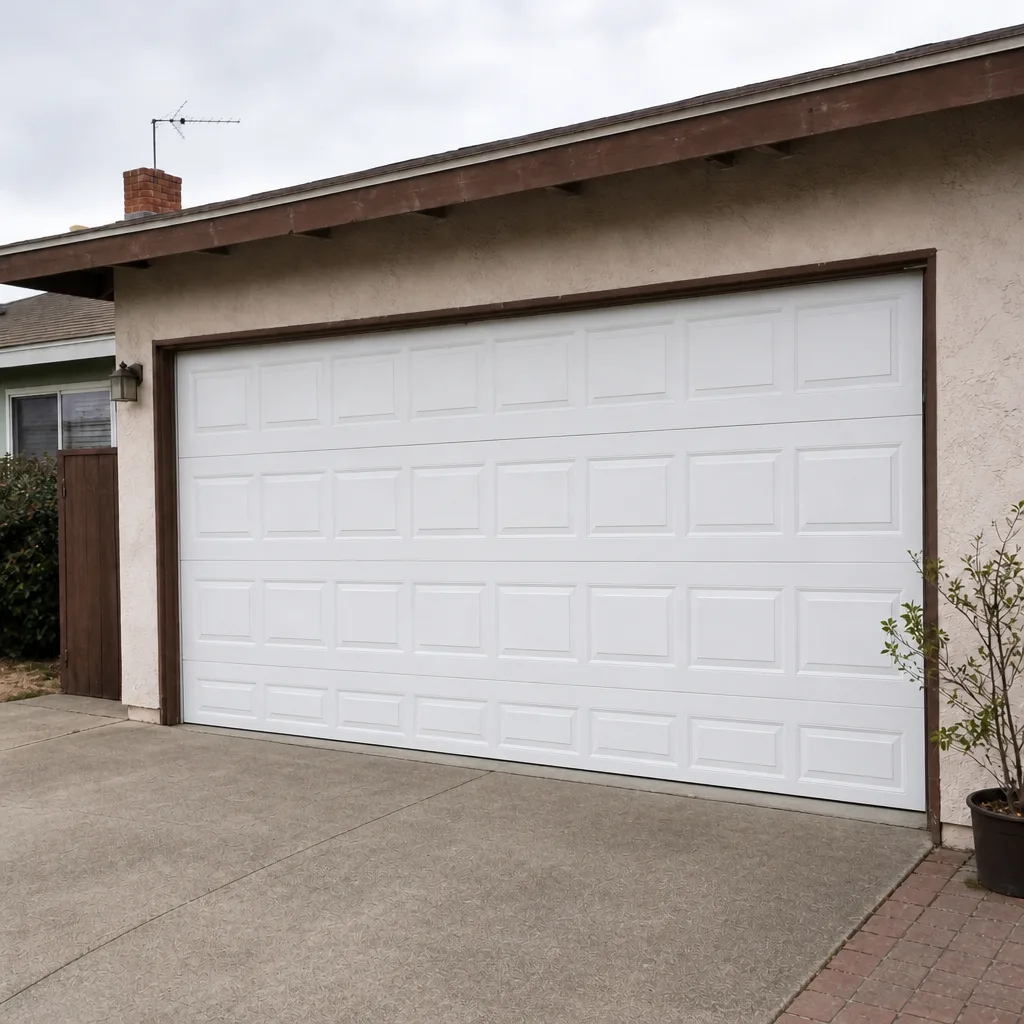 After
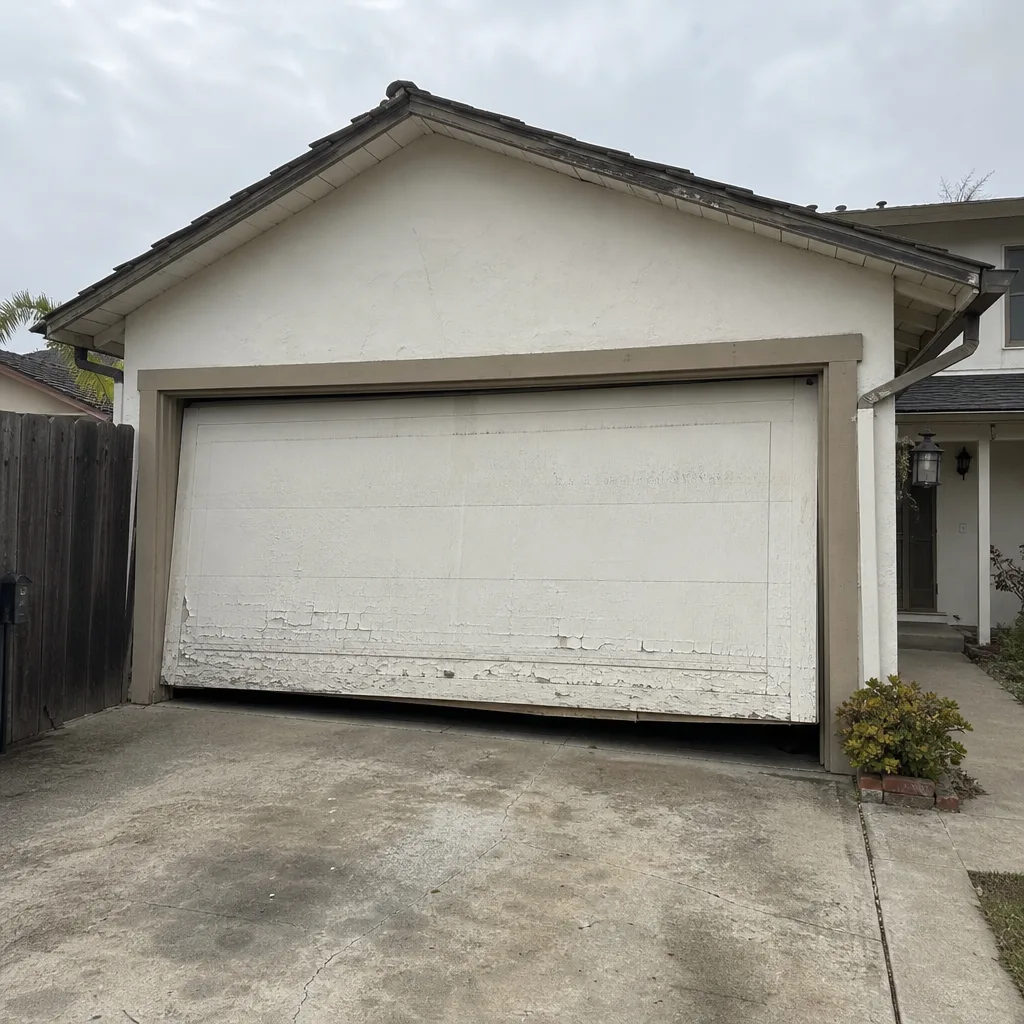 Before
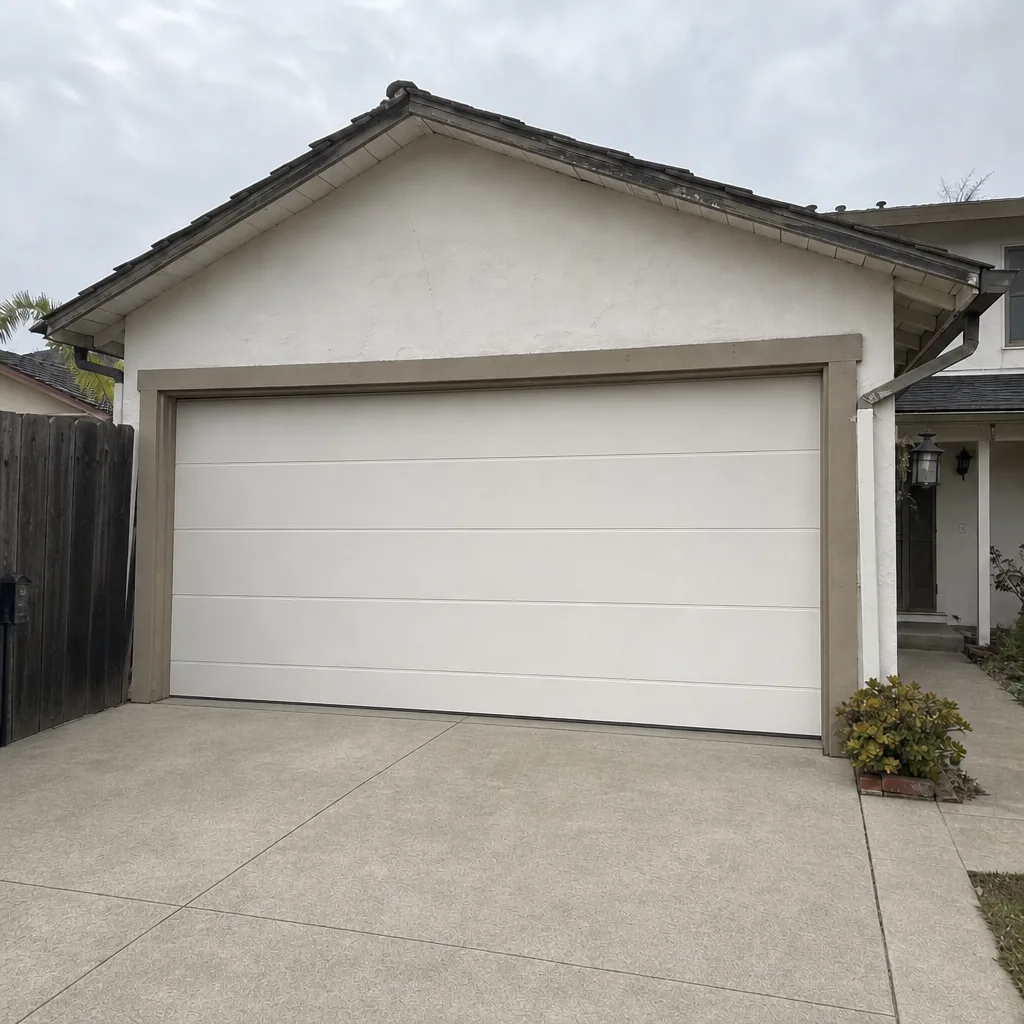 After
When to Call a Professional
Some items belong on the owner’s list, and some belong on ours. Call a professional if the door is out of balance, if a spring is broken or the door won’t lift by hand, if a cable is frayed or rusted or slack, if the door won’t close or reverses when it shouldn’t, or if a hinge, roller, or track is grinding, catching, or misaligned. Call us if the opener is slipping, the door slams down, or the safety reverse doesn’t work. Those are the calls that shouldn’t wait.
At Sunridge Garage Door Repair, we work on garage doors only – repair and opener repair, plus installation – and we work on all of the major brands. Sunridge Garage Door Repair offers free estimates in Ventura. Call (844) 685-4199. We answer 24/7. Fast dispatch from 7am to 7pm, Sunday through Friday. When we come out, you’ll get a straight answer on what the door needs and what it doesn’t.
Frequently Asked Questions
Lubricate hinges, rollers, and tracks every four to six months with a proper garage door lubricant. In Ventura’s humid climate, doors that cycle frequently or sit in heavy humidity may need it closer to every four months. Use a thin coat and wipe off the excess so dust doesn’t collect.
A broken spring or a snapped cable is the most common. Both trace back to skipped balance tests and skipped cable inspections at the four-to-six-month check. Catching a frayed cable or a door that won’t hold halfway up prevents most of these calls.
No. Garage door springs are under heavy tension and adjusting them is the most dangerous task on the door. A trained technician has the right tools and can safely do the work. Broken or out-of-balance springs need a professional, without exception.
Keep a written record of maintenance – monthly checks, seasonal lubrication, and annual professional tune-ups. Save receipts and invoices so you have proof the door was maintained as recommended. On-brand maintenance records support a warranty claim if one comes up.
Most openers should be checked at the annual tune-up for force settings, sensor function, and motor wear. If you have a LiftMaster or Chamberlain opener and the door reverses oddly or the opener hesitates, have it checked right away. An early diagnosis saves a surprise failure.
Yes. A humid climate shortens the lifespan of cables, springs, and the bottom seal. Inspect cables and springs on a shorter interval and check the bottom seal at every seasonal service, because moisture degrades it faster than in a dry climate.
Repair first – most doors can be fixed if the hardware is still sound. A door over ten years old with heavy use and multiple failing parts may be better replaced. We’ll give you a straight answer on which it is, and we won’t push a replacement you don’t need.
Maintenance costs are set per job by a written estimate, and the estimate is free. We don’t quote over the phone without seeing the door. Call (844) 685-4199 for a free estimate and we’ll tell you exactly what your door needs. The written quote is the price, and no work starts before you agree to it.
The Bottom Line
There’s no single maintenance schedule that fits every garage door. The right one comes from your door’s material, age, and how often it cycles. Run a monthly owner check, do a lubrication and balance service every four to six months, and have a professional tune-up every one to two years – sooner for older, wood, or heavy-use doors, and on a shorter cable and seal interval in Ventura’s humid air. Do what’s safe yourself, leave springs and cables to a technician, and document it all to protect your warranty. Then most emergency calls never happen. If you want a professional set of eyes on yours, call (844) 685-4199. We answer 24/7. Fast dispatch from 7am to 7pm, Sunday through Friday. Free estimates, and a price agreed before any work starts.
Written by the team at Sunridge Garage Door Repair. Sunridge Garage Door Repair is your local specialist – Sunridge Garage Door Repair – focused on garage doors only.