
Last updated November 15, 2026
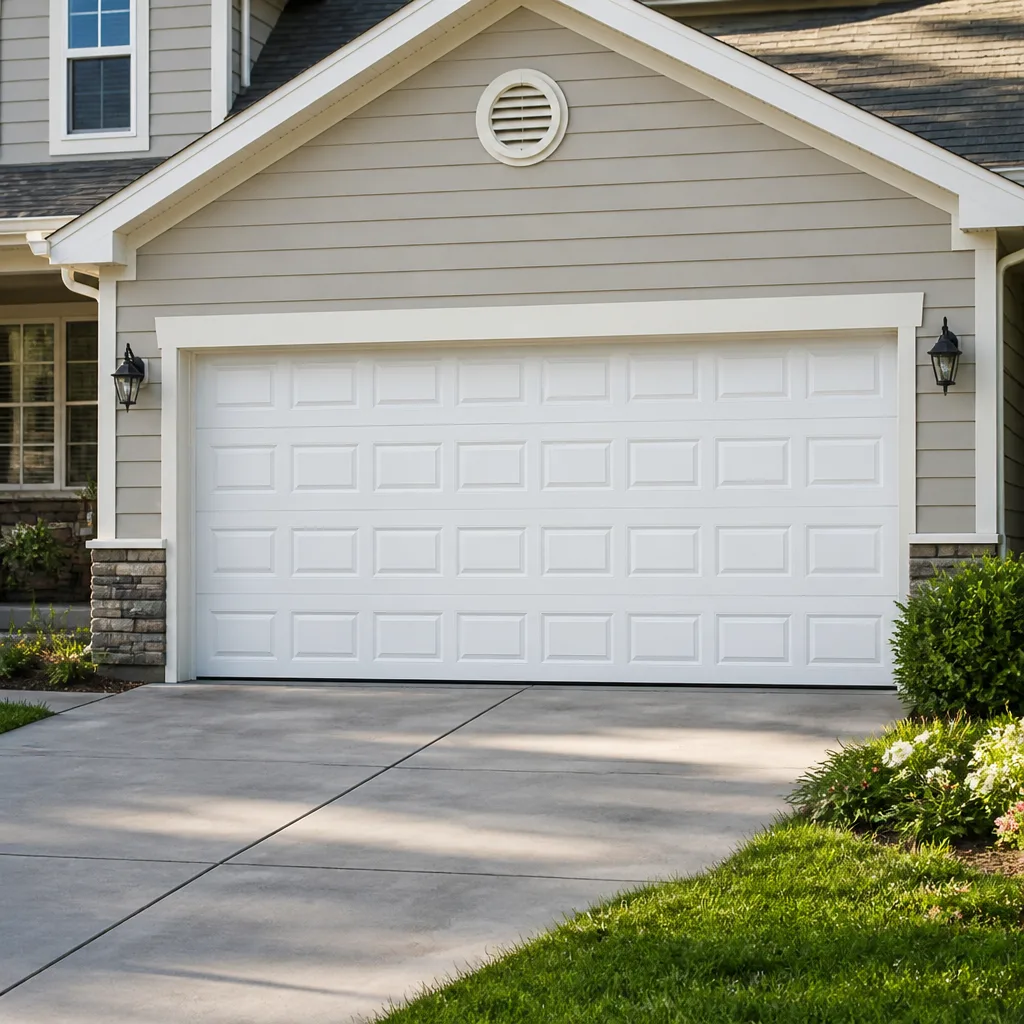 Raised-panel steel
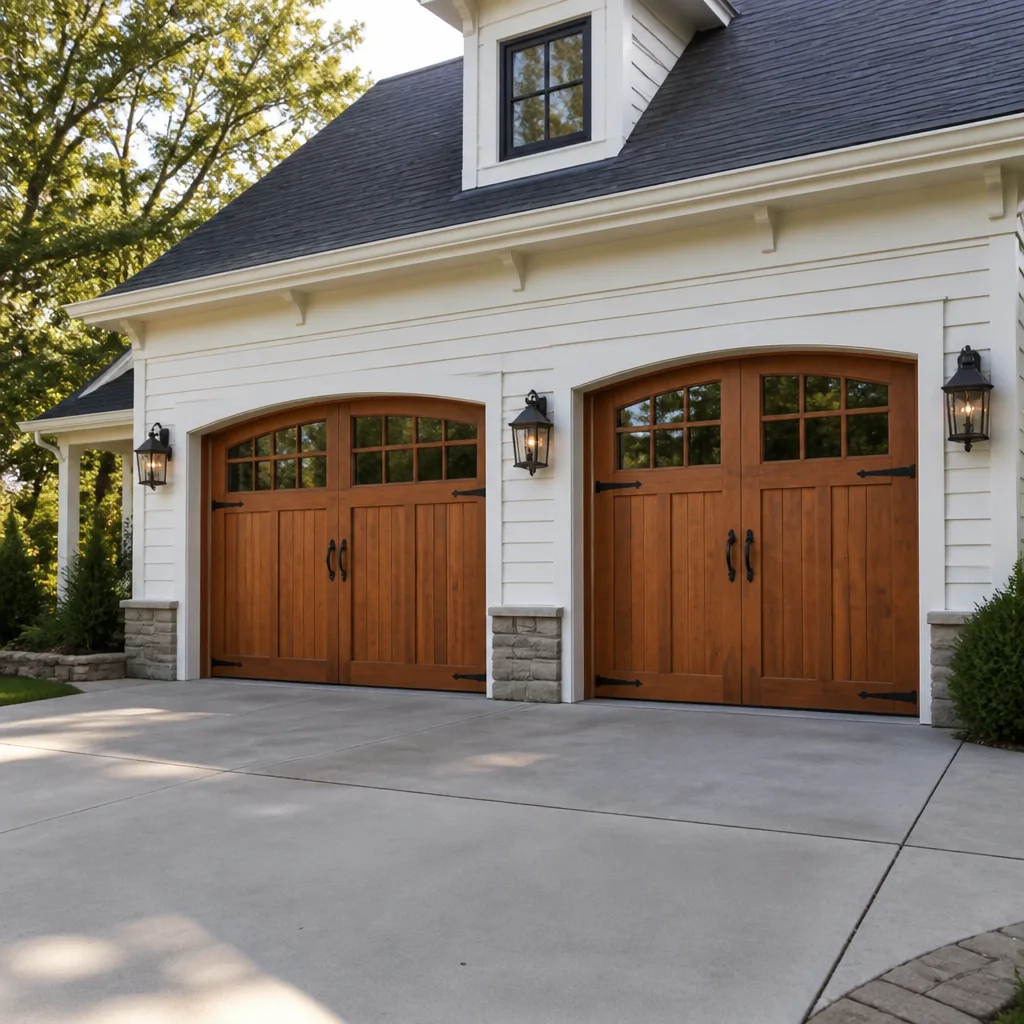 Carriage house
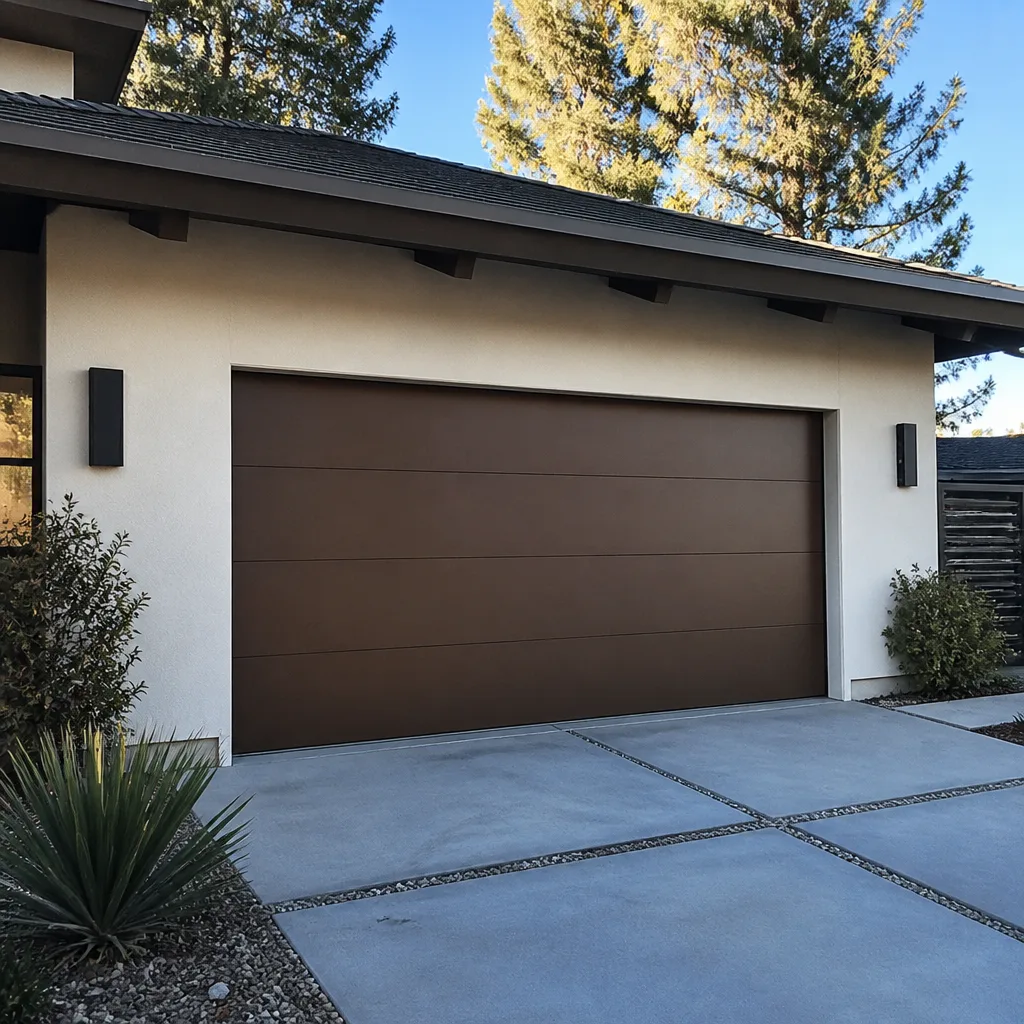 Modern flush
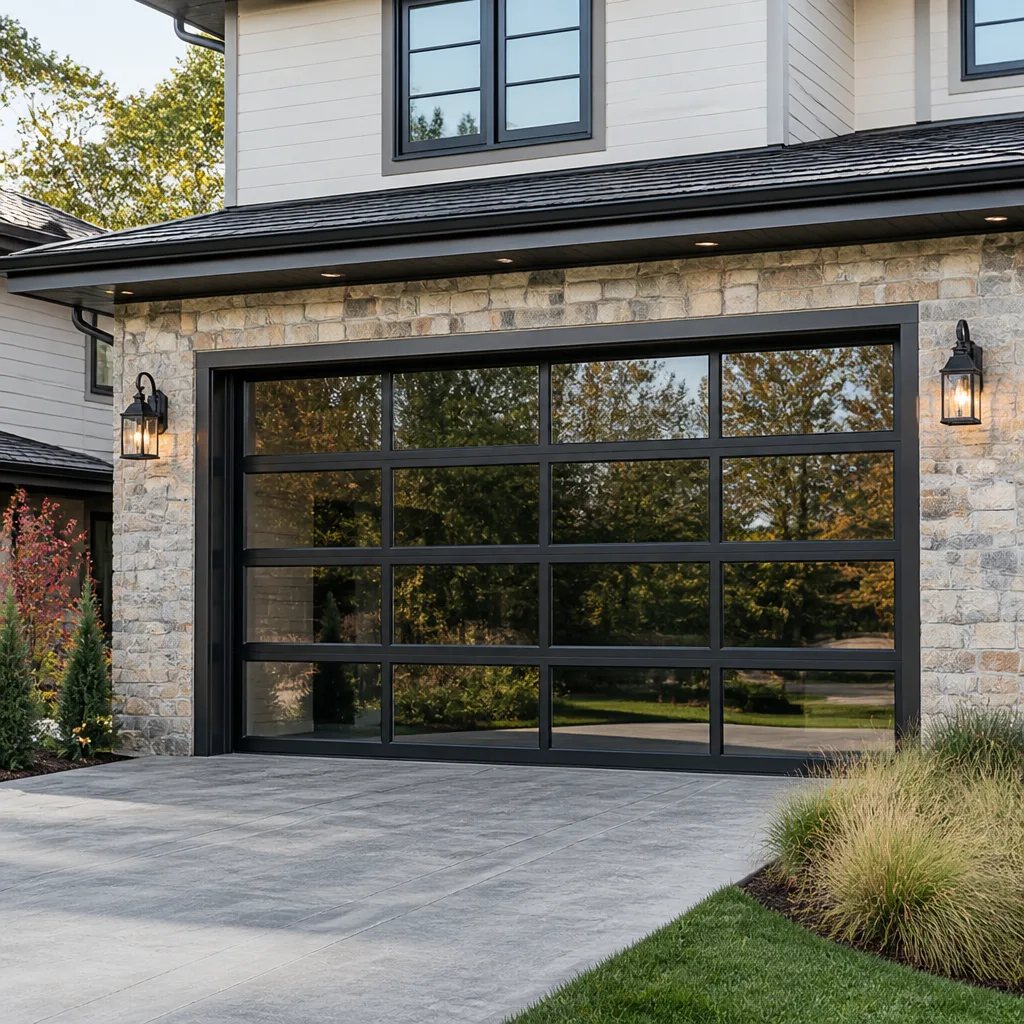 Full-view glass
 LiftMaster openers
 Chamberlain openers
Full 25-point door and opener safety check with every visit - springs, cables, rollers, tracks, and your LiftMaster or Chamberlain opener included
You get a price before we start. It does not change when the pro arrives.
Get your free estimateHow to Hire a Garage Door Contractor in Ventura: A Step-by-Step Guide
Most Ventura homeowners think they’ve done their homework once they’ve confirmed a contractor is licensed and insured. That’s the easy part. The harder question is whether the person standing in your driveway actually knows your equipment. If the contractor you’re interviewing can’t name the brand of your current opener without walking to the garage and reading the label, that tells you something important about how they’ll diagnose it. A garage door is a system built from specific parts made by specific manufacturers, and the tech who recognizes your Clopay or Wayne Dalton setup before opening the panel will find the real problem faster than one who’s guessing. This guide walks you through hiring a garage door contractor in Ventura the way we’d tell a neighbor to do it: ask better questions, read the quote carefully, and know what a specialist sounds like.
Quick Answer
To hire a garage door contractor in Ventura, you want a specialist who works on garage doors only, who can identify your door and opener brands on sight, and who quotes the job in writing before any work starts. Verify licensing and insurance, ask how they diagnose before they recommend a replacement, and treat brand fluency as your best filter. A dedicated garage door company will answer all of this without hesitation. A generalist handyman or a big-box installer usually can’t.
Styles & brands we work with
- Raised-panel steel
- Carriage house
- Modern flush
- Full-view glass
- LiftMaster openers
- Chamberlain openers
Table of Contents
- Why a Garage Door Specialist Beats a Generalist in Ventura
- How Do Ventura Licensing and Bonding Requirements Work?
- Brand Fluency: The Hiring Filter That Tells You the Most
- What Questions Should You Ask During the Interview?
- How to Read a Garage Door Quote for Red Flags
- When a Contractor Says a Part “Needs” Replacing
- What Ventura’s Climate and Housing Mean for Your Door
- Common Mistakes to Avoid
Why a Garage Door Specialist Beats a Generalist in Ventura
A licensed general contractor, a handyman, and a dedicated garage door specialist are three different things, and only one of them is built for the job you’re hiring for.
A general contractor is licensed to manage construction projects, but garage doors are rarely their trade. They may be able to coordinate an install during a remodel, and that’s fine, but a door that’s off-track, a torsion spring that’s failed, or an opener with a dead logic board is a repair call, not a construction project. A handyman is often handy with a range of household fixes. That breadth is useful for a sticking gate or a screen door. It’s not what you want when a 150-plus-pound door is hanging by two cables above a car.
A dedicated garage door specialist works on one system all day. Every dollar of their training, tooling, and experience goes into doors and openers, which means they’ve seen the odd failure modes that a generalist only reads about. In our experience, that focus is the difference between a fix that holds and a callback in a month.
For Ventura homeowners, the specialist route also means better parts matching. Doors and openers fail in ways that depend on the specific hardware: a worn torsion spring varies by door weight and drum size, and an opener’s logic board and safety sensors are manufacturer-specific. A specialist knows the difference. A generalist substitutes a “close enough” part and hopes. Service across Ventura is best handled by someone who has done this work on the Eastside’s older single-family homes and the newer builds up in Onduline and the hills, because the door stock differs with the housing.
If you already know you need work done and want to skip straight to the hiring decision, you can read about garage door repair and see what the process looks like from the technician’s side. It’s a useful frame for the interview.
How Do Ventura Licensing and Bonding Requirements Work?
You don’t need to memorize the California Contractors State License Board code to protect yourself. You need to know what to ask and where to check, because the details of any particular job’s requirements belong to the city of Ventura and the state, not to us.
Here’s the practical sequence. Ask the contractor for their license number and check it yourself on the CSLB website. That lookup tells you whether the license is active, what class it is, and whether there’s any disciplinary history attached. Ask for a certificate of insurance showing general liability coverage, and a workers’ compensation certificate if they have employees. If a company can’t produce a current certificate on request, that’s your answer.
The licensing question gets more nuanced when installation or structural changes are involved. Most cities, including Ventura, require a permit for certain garage door work, especially when framing, header changes, or new electrical connections for an opener are part of the job. We don’t hand out code sections or assume what Ventura’s building department will require for your specific door. Instead, call the city’s building department directly and ask what applies to your project. It takes five minutes and settles the question.
Bonding works alongside insurance. A contractor bond is a consumer protection mechanism, not a warranty on the work. Ask whether the company is bonded and confirm it in writing. If you’re working with a company that connects you to independent local professionals, confirm who holds the license and insurance on your project, because the entity you hire is the one accountable for the work.
Three things to verify before you sign anything:
- Active license number, checked on the CSLB site by you, not just recited over the phone.
- Current general liability insurance, with a certificate provided.
- Workers’ compensation coverage, if the company employs technicians who will be on your property.
One more note: if a contractor offers to skip the permit to “save you time,” that’s a red flag. The permit protects you if something goes wrong.
Brand Fluency: The Hiring Filter That Tells You the Most
Here’s the interview trick worth memorizing. Before you call anyone, walk to your garage and write down two things: the door manufacturer and the opener model. It’s usually printed on a label on the door panel edge and on the opener’s motor housing. Then, when you call, ask the contractor to describe how they’d diagnose a problem with your specific model. The answer tells you whether you’re talking to someone who knows your hardware or someone who’s about to learn on your time.
Garage doors and openers in Ventura are a mix of brands, and each one has its own quirks a specialist recognizes. Clopay doors have specific panel and hinge profiles. Amarr and Wayne Dalton have their own spring and track configurations. Craftsman openers share a lineage with certain Chamberlain models but not all, and the differences matter when you’re sourcing a replacement logic board or a safety sensor. LiftMaster, Genie, and Raynor each have their own diagnostic codes and parts channels. A contractor who works across all of these can identify the actual system on your home instead of defaulting to a generic substitute.
Ask these questions in the first call:
- “Can you tell me what opener model I have based on the symptoms I’m describing?”
- “Do you carry the parts for that model, or do you have to source them?”
- “If the logic board is the problem, do you repair or replace it?”
- “Do you work on both the door and the opener, or just one?”
The answers reveal more than any review or website copy. A specialist who can walk through your opener’s likely failure points over the phone is the same person who will diagnose it accurately in your driveway. Our technicians have up to 15 years of experience working this category of equipment, and the reason brand fluency matters is that a wrong diagnosis on a garage door opener repair wastes a service call and often a part.
What Questions Should You Ask During the Interview?
A good hiring process is mostly a good interview. Here’s the sequence we suggest when you’re evaluating a garage door contractor in Ventura, and what a strong answer to each question sounds like.
- “What’s your license number, and are you insured?” A strong answer is immediate, specific, and invites you to verify. A weak one is vague or defensive.
- “What brands do you work on?” A strong answer names multiple manufacturers and explains what differs between them. A weak one names one brand or says “all of them” without elaboration.
- “How do you diagnose before recommending a repair?” A strong answer describes actually checking the door: balance, travel, spring tension, sensor alignment, opener codes. A weak answer jumps to a replacement recommendation before anyone has looked.
- “Will you quote in writing before any work starts?” A strong answer is an automatic yes. A weak one is “we’ll see once we’re out there.”
- “What’s your approach to repair versus replacement?” A strong answer is repair first, replacement when the door or opener is genuinely at the end of its service life. A weak answer pushes replacement on the first call.
- “What’s the price, and what’s included?” A strong answer gives you a written range with line items and tells you what’s not included. A weak one gives a number over the phone without seeing the door.
Two things about the answers that experienced homeowners learn to listen for. First, a real specialist asks you questions back: what’s the door doing, when did it start, is the opener light flashing, have you tried the wall button versus the remote. That back-and-forth is diagnostic information, not small talk. Second, a real specialist gives you a straight answer when a job is out of scope. If your door problem turns out to be a wall stud issue, a proper garage door contractor should tell you that you need a contractor and step aside.
Ask for a written estimate on every quote, even if the job sounds small. The written version is the document you’ll rely on if the price changes.
How to Read a Garage Door Quote for Red Flags
Reading a garage door quote is its own skill. The line items tell you whether you’re talking to a thorough technician or someone who is upselling. Here’s how to separate them.
A thorough quote is specific. It names the part, the quantity, the length or gauge where relevant, and the labor to install it. If you have a broken torsion spring, a good quote says “one spring” and a price; if your door uses a matched pair, the quote says “matched pair of springs” and prices it as two. A good quote also lists what’s included in labor: hauling away the old parts, balancing the door, testing the opener and safety sensors, and confirming the door travels and reverses correctly.
The red flags are the opposite. Vague line items like “repair door – $X” with no explanation. A quote that packages an unnecessary opener replacement with a spring repair. A quote that adds a full tune-up to a simple broken cable without asking whether you want it. A quote where the number changes between the phone call and the driveway visit. And a quote that pressures you into a decision on the spot, which is the classic signal of upselling.
Two specific things to look for that most homeowners miss:
- Spring pricing is per spring. A matched pair costs roughly twice the single-spring price. If a quote lists one price for “springs” and the number looks suspiciously low for a pair, ask them to break it out.
- Opener replacement bundled into a repair. If the door won’t open and the technician recommends a new opener before checking the door balance, the spring, the cables, and the sensors, ask why. The opener is often fine and the door is the problem.
Also confirm the price is quoted and agreed before any work starts, and that the written estimate sets the final price. If the technician finds something different once they’re on site, they should tell you before doing the work and give you a new written quote. Anything else is a red flag. When you call for a quote, ask whether the estimate is free, and get that in writing too.
When a Contractor Says a Part “Needs” Replacing
This is the moment your hiring work pays off. “This needs replacing” is a claim, and a confident specialist explains it differently than a generalist does.
Here’s the difference in practice. A confident specialist tells you what they checked, what they found, and what it means. “Your left torsion spring has lost tension and won’t hold the door in balance, which is why it’s drifting down. The right spring is showing rust. I’d replace the pair so they wear evenly.” That’s a diagnostic explanation you can follow. A generalist says “that part’s worn out, it needs replacing,” without checking the adjacent parts or explaining the failure mode. When you ask how they know, they get vague.
When a contractor says a part needs replacing, ask three questions:
- “What did you check?” A specialist can describe the test. Balance, travel, spring tension, cable condition, track alignment, sensor alignment, opener diagnostic codes.
- “What happens if we don’t replace it right now?” A confident answer distinguishes between “this will fail in the next month” and “this is a safety issue today.” A generalist will say “it’ll get worse” without detail.
- “What are my repair options instead?” A confident specialist will say whether a repair is possible, even if they recommend replacement. A generalist pushes the sale.
The part most frequently misdiagnosed is the opener. A failing opener is often actually a failing spring, a misaligned safety sensor, or a worn roller. We look at the door before we look at the opener, because replacing an opener to fix a door problem is the most common and most expensive mistake in this trade.
On safety: the torsion spring, cables, and the door itself are genuinely dangerous components. A torsion spring stores enormous energy and can cause serious injury if it’s handled without the right tooling and training. We do not recommend DIY work on springs, cables, or anything above the door that carries tension. Call a trained professional for those. The one thing a homeowner can safely do is the monthly safety check: test the door’s auto-reverse by placing a roll of paper towels in the door’s path and see if it reverses on contact.
What Ventura’s Climate and Housing Mean for Your Door
Garage doors in Ventura live a relatively easy life compared to doors in harsher climates, and that shapes how you should think about hiring and maintenance.
Winters here are mild, so you won’t see the freeze-thaw cycling that splits door panels and stresses springs in other parts of the country. That’s good news for your door’s lifespan. The trade-off is that the wear you do see tends to come from sun, use, and dust. Ventura’s sunny stretches mean UV exposure on door finishes, particularly on west-facing doors, and sun can break down the rubber seals and weatherstripping at the bottom of the door faster than you’d expect. A door with a failing bottom seal lets in dust, drafts, and small pests, and it’s one of the cheapest fixes in this trade.
Housing stock matters too. Ventura has a mix of older single-family homes where the doors and openers have been in service for a long time, and newer builds where the equipment is newer but the installation quality varies. A pre-1980s home may have a heavier wooden door, which puts more strain on springs and openers and means parts need to be matched to the door’s weight. Newer builds often have lighter steel doors and newer openers, but the installer may have cut corners on the track alignment or the balance. A specialist will check the balance and the track before quoting, because a door that’s out of balance eats springs and openers faster than a door that isn’t.
If you’re hiring for a new install rather than a repair, the same principle applies: the specialist should measure the opening, check the headroom and the side room, and confirm the door weight before recommending a door and opener combination. The hardware has to match the opening and the home. If you want a broader picture of the local market, the Ventura service page covers the area and what to expect.
Common Mistakes to Avoid
- Hiring the first quote without a comparison. Two or three written quotes tell you whether a price is in line. A single quote tells you nothing, and a tech who knows you’re not comparing has no reason to sharpen the number.
- Assuming a general contractor is a garage door specialist. A licensed general contractor can manage a remodel, but that’s a different skill from diagnosing a torsion spring or an opener logic board. For repair work, ask for a garage door specialist.
- Choosing the lowest quote without reading it. A low number with vague line items often becomes a bigger number once the work starts. The quote’s detail matters more than its headline price.
- Letting the opener be replaced before the door is checked. A door that won’t open is often a spring or balance problem, not an opener problem. If the technician jumps to the opener without checking the door, ask them to walk through the door checks first.
- Skipping the permit on an install. If the job involves framing or a new electrical connection for the opener, most cities require a permit. Confirm with Ventura’s building department and don’t let a contractor talk you out of it to save time.
- Not asking about brand coverage. Some contractors only work on a few brands, and some installers only install one. Ask which doors and openers they service before you book the visit.
- Treating spring work as a DIY job. The spring, the cables, and the door’s tension are the dangerous parts of this system. A trained professional with the right tooling should handle them, and the risk of a serious injury isn’t worth the savings.
See the difference
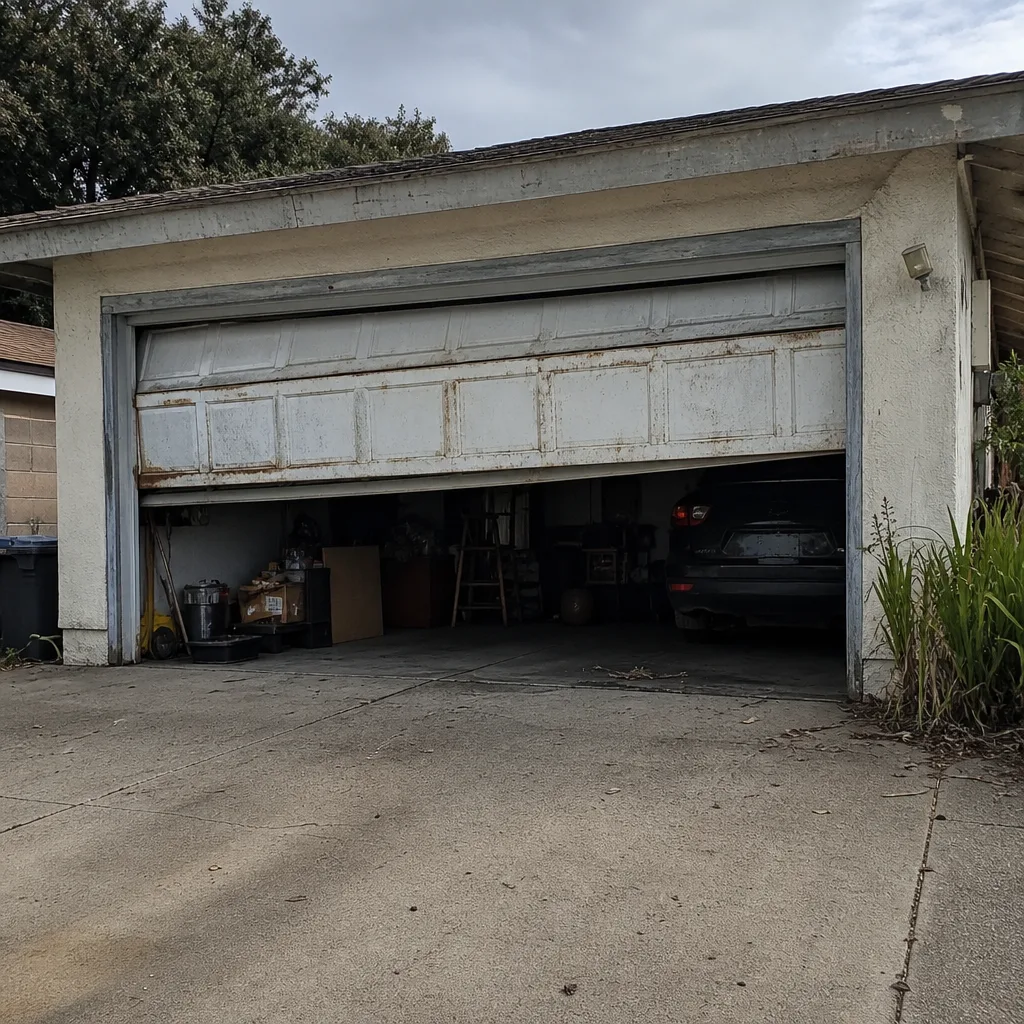 Before
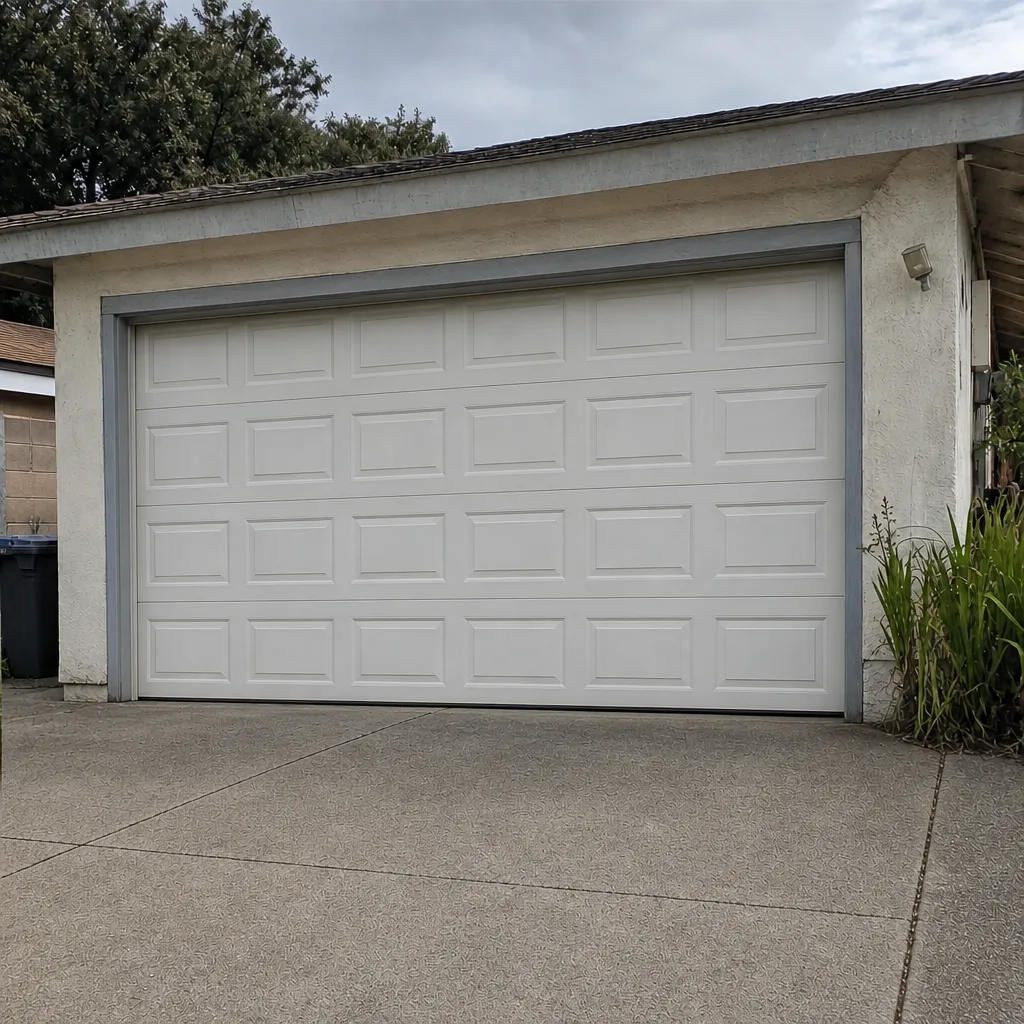 After
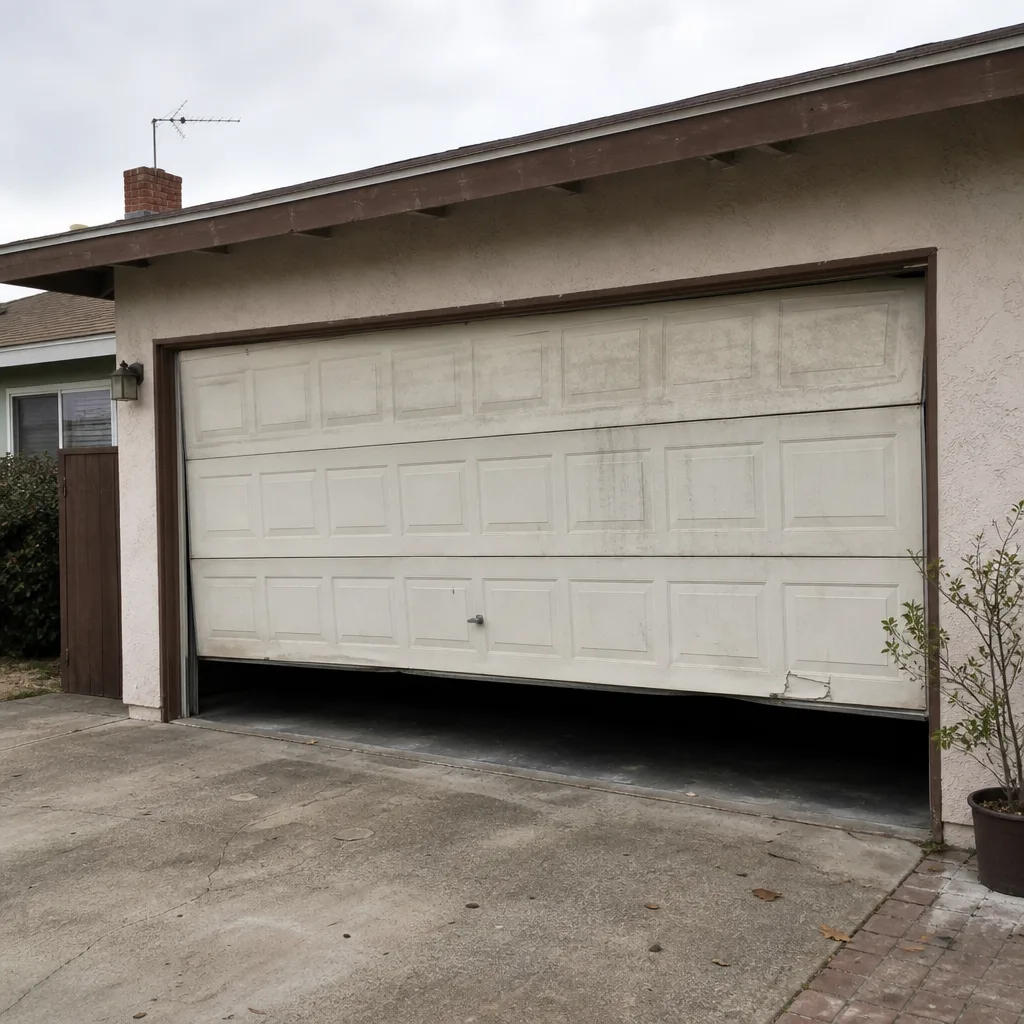 Before
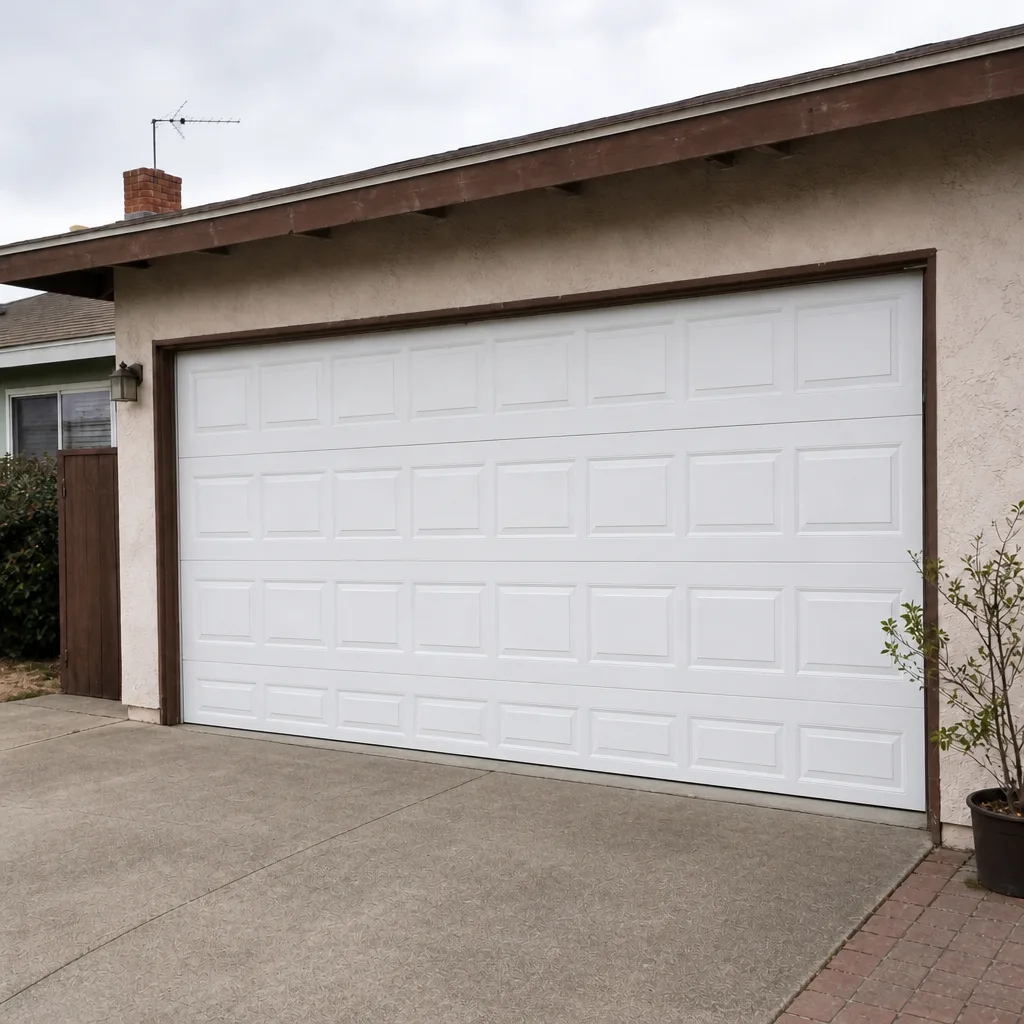 After
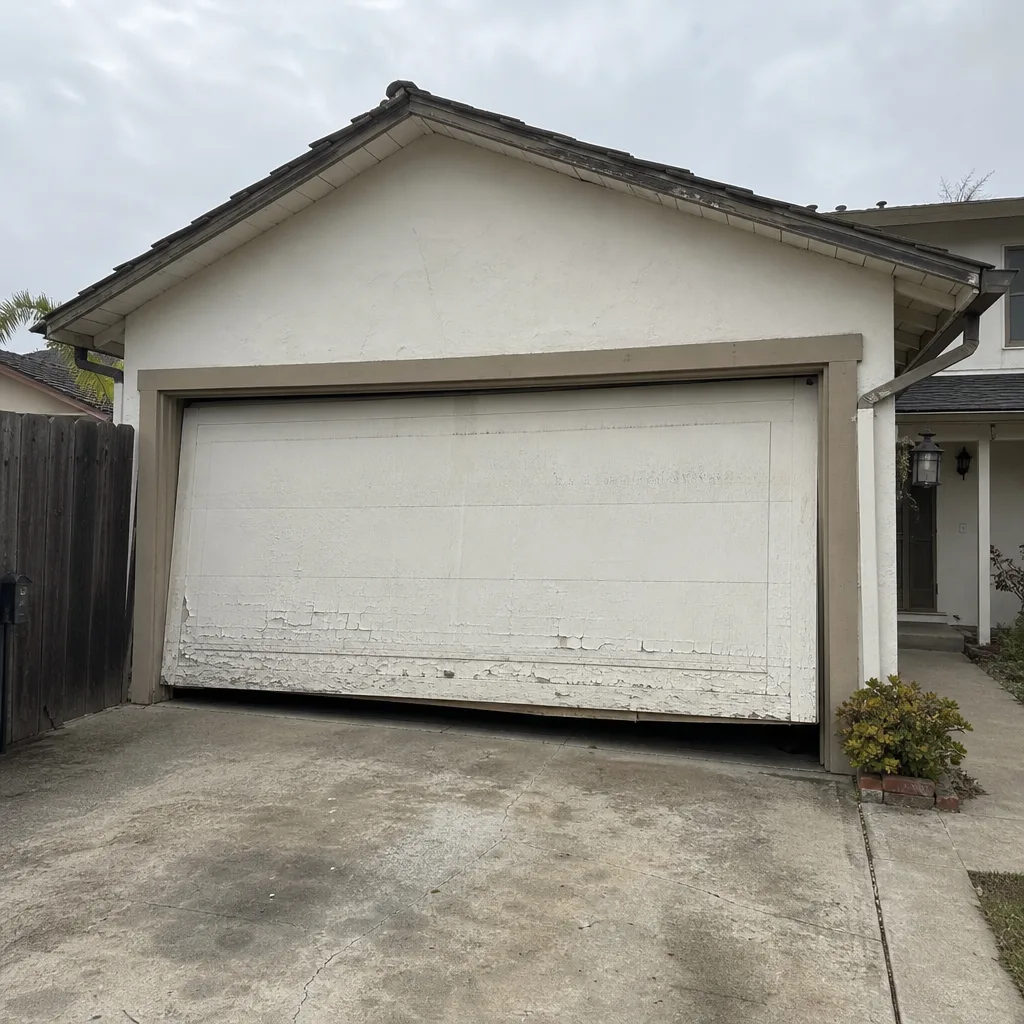 Before
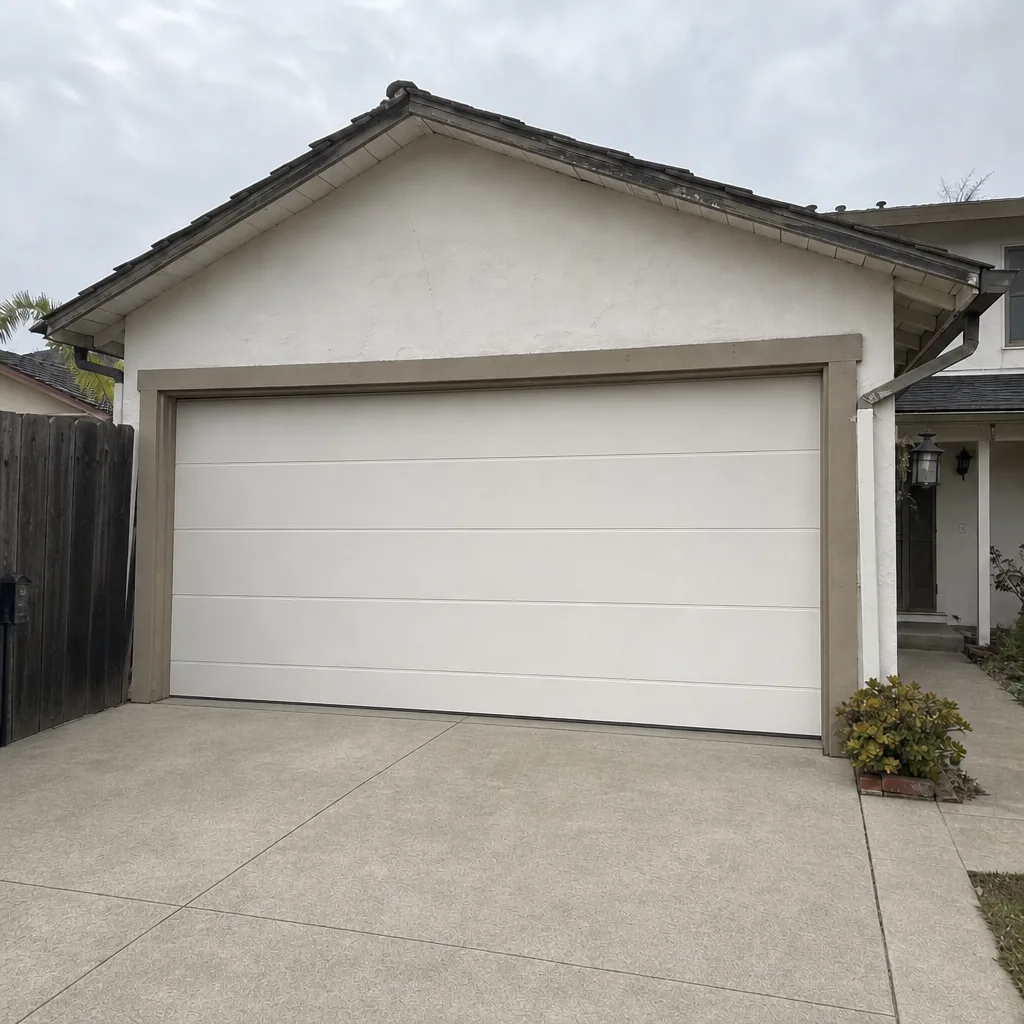 After
When to Call a Professional
Some garage door problems are safe to watch and wait on. A noisy roller, a sticking bottom seal, or a remote with a dead battery is worth a callback but not an emergency. Other problems are a call now. If the door won’t open or close all the way, if you hear a loud bang from the spring area, if the door is off its track or hanging unevenly, if the opener light is flashing and the door won’t respond, or if the door won’t reverse when it meets an obstruction, those are signs to bring in a trained professional. The spring and cable components carry real stored energy and the door itself is heavy enough that a failure can cause serious injury. Don’t try to force a sprung door open or closed to get the car out.
Sunridge Garage Door Repair offers free estimates in Ventura. We work on the door, the opener, and new installs, and we service Clopay, Amarr, Wayne Dalton, Craftsman, LiftMaster, Chamberlain, Genie, and Raynor equipment. Call (844) 685-4199. We answer 24/7. Fast dispatch from 7am to 7pm, Sunday through Friday.
Frequently Asked Questions
Ask two questions: what brands do you work on, and how would you diagnose my specific opener. A specialist names multiple manufacturers, explains the differences between them, and describes the door checks they run before recommending a repair. A generalist answers vaguely or defaults to a single brand. You can also confirm the company’s license on the California Contractors State License Board website and ask for a certificate of insurance.
A handyman is a reasonable choice for a light household fix, but not for garage door repair or installation. The door is a heavy system with stored energy in the spring and cables, and the opener is a manufacturer-specific electronic component. A dedicated garage door company has the training and tooling for this system, while a handyman is usually substituting a “close enough” approach. For anything beyond a bad remote or a bottom-seal replacement, call a specialist.
It depends on the scope of the work. Most cities, including Ventura, require a permit when the job involves framing, header changes, or a new electrical connection for the opener. A straight replacement of a door and opener into the same opening may or may not require one. Call Ventura’s building department directly and describe your project; they’ll tell you what applies. Don’t accept a contractor’s offer to skip the permit to save time.
The written estimate sets the price. A thorough quote is based on an in-person assessment, not a phone call, so the number you agree to before work starts is the number you should expect to pay. If the technician finds a different problem once they’re on site, they should tell you before doing the work and give you a new written quote. Any quote that changes without a new document isn’t a quote, it’s an estimate in the loose sense.
Vague line items with no description of the part or the labor, an opener replacement bundled into a simple repair before the door is checked, a price that changes between the phone call and the visit, and pressure to decide on the spot. A thorough quote names the part, the quantity, the labor, and what’s included. When in doubt, ask for the quote in writing and compare two or three before you decide.
It depends on the job. A spring or cable repair is typically a same-day visit, and an opener issue can be too. A new installation is measured, ordered, and scheduled, so it takes longer from first call to finished job. Ask upfront whether the job you’re describing is a repair call or an install, because the timeline is different. Call (844) 685-4199 for an exact quote on your door. Estimates are free.
The Bottom Line
Hiring a garage door contractor in Ventura comes down to a few durable habits. Verify license and insurance yourself, and don’t take a phone number as proof. Ask brand-specific questions and treat the answers as your best filter, because a specialist who recognizes your Clopay or LiftMaster equipment will diagnose it accurately the first time. Get a written quote with line items, confirm the price is agreed before any work starts, and read the quote rather than trusting the headline number. Skip the permit question carefully, and call Ventura’s building department if installation or framing is involved. Leave the spring and cable work to a trained professional. Do those things and you’ll avoid the most common hiring mistakes. When you’re ready to talk to a specialist, call (844) 685-4199 for a free estimate.
If you want to start with the broader picture of what we do, the Sunridge Garage Door Repair home page lays out our three service lines: garage door repair, opener repair, and new installation. From there, you can decide whether you want to call or compare quotes first. Either is a fine way to start. Call (844) 685-4199. We answer 24/7. Fast dispatch from 7am to 7pm, Sunday through Friday.
Written by the team at Sunridge Garage Door Repair.